
What everybody does, and what everybody gets
Opportunities
Every side of a load has its own job on this platform and its own way of being paid for it. Here is each one, in plain terms, with where the money actually comes from.
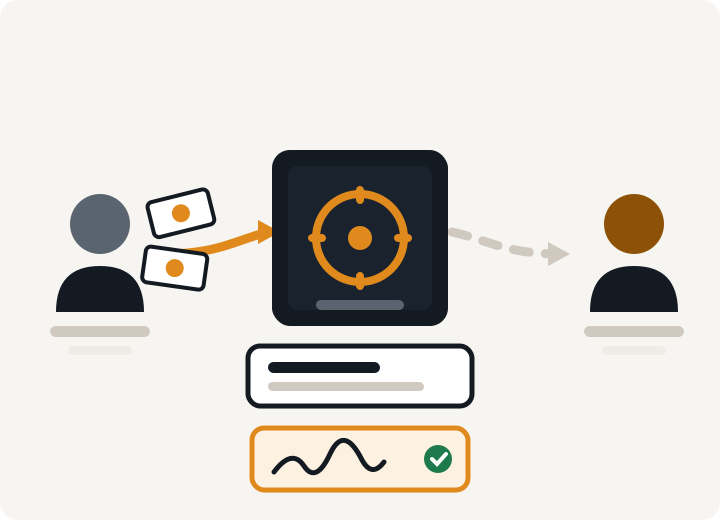
Where The Money Comes From
One pot, paid by the customer before the truck moves, split when the receiver signs.
The customer pays up front. The price they accepted is taken from their wallet and held by the platform. It is not the transporter's money yet and it is not ours.
The receiver signs at the door. That signature is what releases the hold. Until it happens, or a dispute or a claim is settled, nothing moves.
Then it splits. The transporting business gets its carriage, the clearing desk gets its fee, and the platform takes its commission. Each business withdraws from its own wallet to its own bank account.
The driver is paid by their operator. The platform does not pay somebody else's driver, because the platform is not their employer. An owner may release part of the held money to a driver mid-trip for fuel or border money, capped, and that comes off their own share.
Each Side Of A Load
What you do here, and what you earn or pay for doing it.
Shippers
You have something that needs moving
Post what is moving and where. The price comes back before you commit to anything, and you watch the truck to the door.
What you getTransporters
You run trucks
Work comes to the trucks that fit it. You are paid out of money that was already put aside before your driver turned a wheel.
What you getOwner-Drivers
You own the truck and you drive it
One account that is both the business and the driver, so nobody has to accept a load on your behalf.
What you getFreight Brokers
You move loads without owning trucks
You know where the cargo is, which road is cheapest and who to put on it. Arrange the whole move here and keep your margin.
What you getDrivers
You are the one on the road
One screen, one next step, and a button that brings the desk to you when something goes wrong.
What you getClearing Agents
You work the border
Cross-border loads come to your desk with the paperwork already listed, and your fee travels in the customer's price.
What you getReceivers
You are expecting a delivery
A link, no account. See where it is, and sign for it when it reaches you.
What you getPartners
You sell to operators
Fuel, tyres, cover and workshops, put in front of the fleets that are actually running.
What you getWhat The Platform Takes
A percentage of the freight, off the transporter's share, and it falls as the load gets bigger. Figures shown in ZAR.
| Freight on the load | Commission |
|---|---|
| R0.00 to R7,000.00 | 6% |
| R7,000.00 to R35,000.00 | 5% |
| R35,000.00 to R140,000.00 | 4% |
| R140,000.00 and above | 3% |
A long cross-border run gives up a smaller share than a short local one, because the work is the same and the value is not.
The transporter. Carriage, less the commission above, in their wallet when the load is signed for. A subscription takes points off the commission on every load.
The clearing desk. Their own fee, set by them per border post, travelling in the customer's price from the quote onwards so nobody argues about it at the gate. They also quote on paid help work, which is their profession and their earnings.
The freight broker. Whatever sits between what they charge their client and what they pay the transporters and desks they book. The platform takes its commission on the load; the margin is theirs.
The partner. Nothing is bought through the platform, so there is nothing to take a cut of. A partner pays to put a deal in front of working fleets and is paid by the operator directly when the code is used.
The driver. Paid by the operator they drive for, on whatever terms the two of them have. What the platform gives a driver is the work, the record of it and the signature that closes it.